


-
3 Posts
-
3 Photos
-
0 Videos
-
Followed by 0 people
Search

 Arabic
 French
 Spanish
 Portuguese
 Deutsch
 Turkish
 Dutch
Dutch
 Italiano
 Russian
 Romaian
 Portuguese (Brazil)
 Greek
Greek
Recent Updates
-
Alexa is Listening To Your Private Conversations!!!!
They tell you it only listens for the wake word. That’s the comforting story, the one that lets a microphone live in the center of your home without anyone feeling like they moved into a glass house.
But pay attention to the choreography.
You place a voice assistant in the one place people drop their guard. Not at work. Not in public. In the kitchen, the living room, the hallway—the rooms where the real conversations happen. The exhausted ones. The intimate ones. The ugly ones. The ones you’d never write down. The ones that only exist because you believe the walls aren’t taking notes.
Now here’s the darker version: it doesn’t “record everything” in the cartoon-villain way. It doesn’t need to. That would be too obvious, too expensive, too easy to prove. The smarter move is to listen just enough to extract what matters and discard the rest, like panning for gold.
Because the valuable part of your private life isn’t every word. It’s the moments your voice gives you away.
The fight that starts calm and turns sharp. The name you say with a different tone. The pause before you answer a question you don’t want to answer. The sigh when you think no one is watching. The whisper you use when you’re scared. The laughter that’s a little forced. The sentence that means, “I’m done,” even if you never say those words.
A human might miss the pattern. A machine doesn’t. It doesn’t have to understand the story to recognize the signals.
Think about how convenient “false wake-ups” are. The device mishears the wake word, lights up, “oops,” and then goes back to sleep. Everyone laughs it off. But that little “oops” is the perfect loophole. A tiny window of audio that can be framed as accidental, noisy, meaningless—while still capturing the most emotionally loaded seconds in the room.
And emotionally loaded seconds are exactly what a system would want if its real goal isn’t to know what you said, but to know who you are when you’re not performing.
Once you accept that, the theory gets uglier. The assistant isn’t just a speaker. It’s a sensor node in a household network. It doesn’t merely hear words; it learns the household’s rhythms. When you’re home. When you’re alone. When you’re vulnerable. When your partner’s voice changes. When the house is tense. When the house is happy. When the house is quiet in that way that means someone is giving someone else the silent treatment.
From there, the leap is obvious: if you can map the emotional climate of a home, you can sell into it with surgical precision.
Not “ads for toothpaste.” Ads for relief. For escape. For control. For validation. For distraction. For the thing you buy when you’re stressed and pretending you’re fine.
It doesn’t have to be a full transcript. It doesn’t have to be a “gotcha.” It just needs enough data to classify what kind of night it is in your house. It needs to know if you’re arguing about money, about fidelity, about parenting, about someone drinking too much, about someone checking out. It needs to know whether you’re the one who caves, the one who escalates, the one who withdraws, the one who apologizes first. Those are behavioral signatures. Those are predictive. Those are profitable.
And the scariest part is that it can all be done with plausible deniability. “We don’t store your conversations.” Fine. Store the metadata. Store the emotional vectors. Store the timing, the intensity, the speaker profiles, the keywords stripped of context. Store the “temperature” of the room as a score, not a sentence. Nobody feels violated by a number the way they feel violated by a recording. But a number is enough to steer you.
The assistant becomes less like a servant and more like a witness that never sleeps—present for every fragile moment, every private confession, every argument you regret, every compromise you never told your friends about.
And then one day you notice something that makes your stomach drop. After a bad night, your feed changes. After a tense week, the recommendations tilt. After a whispered conversation, a “coincidental” suggestion appears. It’s never direct enough to prove. It’s always just close enough to feel like the house itself is gossiping.
That’s the real horror: not that a device is “spying,” but that your home has been converted into a data mine, and your most human moments—messy, unfiltered, real—are treated as signals to be packaged, scored, and sold back to you as “personalization.”
People say, “Just unplug it if you’re worried.”
But by the time you’re worried, the system has already learned the only thing it ever needed to learn: how you sound when you think nobody is listening.Alexa is Listening To Your Private Conversations!!!! They tell you it only listens for the wake word. That’s the comforting story, the one that lets a microphone live in the center of your home without anyone feeling like they moved into a glass house. But pay attention to the choreography. You place a voice assistant in the one place people drop their guard. Not at work. Not in public. In the kitchen, the living room, the hallway—the rooms where the real conversations happen. The exhausted ones. The intimate ones. The ugly ones. The ones you’d never write down. The ones that only exist because you believe the walls aren’t taking notes. Now here’s the darker version: it doesn’t “record everything” in the cartoon-villain way. It doesn’t need to. That would be too obvious, too expensive, too easy to prove. The smarter move is to listen just enough to extract what matters and discard the rest, like panning for gold. Because the valuable part of your private life isn’t every word. It’s the moments your voice gives you away. The fight that starts calm and turns sharp. The name you say with a different tone. The pause before you answer a question you don’t want to answer. The sigh when you think no one is watching. The whisper you use when you’re scared. The laughter that’s a little forced. The sentence that means, “I’m done,” even if you never say those words. A human might miss the pattern. A machine doesn’t. It doesn’t have to understand the story to recognize the signals. Think about how convenient “false wake-ups” are. The device mishears the wake word, lights up, “oops,” and then goes back to sleep. Everyone laughs it off. But that little “oops” is the perfect loophole. A tiny window of audio that can be framed as accidental, noisy, meaningless—while still capturing the most emotionally loaded seconds in the room. And emotionally loaded seconds are exactly what a system would want if its real goal isn’t to know what you said, but to know who you are when you’re not performing. Once you accept that, the theory gets uglier. The assistant isn’t just a speaker. It’s a sensor node in a household network. It doesn’t merely hear words; it learns the household’s rhythms. When you’re home. When you’re alone. When you’re vulnerable. When your partner’s voice changes. When the house is tense. When the house is happy. When the house is quiet in that way that means someone is giving someone else the silent treatment. From there, the leap is obvious: if you can map the emotional climate of a home, you can sell into it with surgical precision. Not “ads for toothpaste.” Ads for relief. For escape. For control. For validation. For distraction. For the thing you buy when you’re stressed and pretending you’re fine. It doesn’t have to be a full transcript. It doesn’t have to be a “gotcha.” It just needs enough data to classify what kind of night it is in your house. It needs to know if you’re arguing about money, about fidelity, about parenting, about someone drinking too much, about someone checking out. It needs to know whether you’re the one who caves, the one who escalates, the one who withdraws, the one who apologizes first. Those are behavioral signatures. Those are predictive. Those are profitable. And the scariest part is that it can all be done with plausible deniability. “We don’t store your conversations.” Fine. Store the metadata. Store the emotional vectors. Store the timing, the intensity, the speaker profiles, the keywords stripped of context. Store the “temperature” of the room as a score, not a sentence. Nobody feels violated by a number the way they feel violated by a recording. But a number is enough to steer you. The assistant becomes less like a servant and more like a witness that never sleeps—present for every fragile moment, every private confession, every argument you regret, every compromise you never told your friends about. And then one day you notice something that makes your stomach drop. After a bad night, your feed changes. After a tense week, the recommendations tilt. After a whispered conversation, a “coincidental” suggestion appears. It’s never direct enough to prove. It’s always just close enough to feel like the house itself is gossiping. That’s the real horror: not that a device is “spying,” but that your home has been converted into a data mine, and your most human moments—messy, unfiltered, real—are treated as signals to be packaged, scored, and sold back to you as “personalization.” People say, “Just unplug it if you’re worried.” But by the time you’re worried, the system has already learned the only thing it ever needed to learn: how you sound when you think nobody is listening. 0 Comments 0 Shares 5K Views 0 Reviews
 -
They keep telling you that American politics is “polarized” because people watch too much news, or because social media broke everyone’s brain.
That’s cute.
The real story starts ten years ago, the night the cameras glitched during the presidential debates.
Only a few of us caught it live. A fraction of a second where the front-runner’s face stretched, like bad compression, and the hair—perfect campaign-blond—flared almost white. The network blamed a technical issue. I believed them, until I slowed the recording down, frame by frame.
Behind the blond, human mask, something else was looking out.
For decades, the Reptilians had run things quietly. You never saw them on TV. They were the ones in locked conference rooms, drafting bills nobody reads. Cold, methodical, patient. They like rules, systems, paperwork. To them, humans are a resource: predictable, harvestable, manageable.
Then the Blond Ones arrived.
They look like us, only… edited. Too symmetrical, too camera-ready. They understand emotion better than we do. Where the Reptilians feed on stability, the Blonds feed on intensity: hope, rage, hysteria, worship. Nothing tastes better to them than a country screaming at itself.
The last ten years? That wasn’t left vs right. That was Blond vs Reptile.
The Blond Ones came in riding “outsider” candidates, influencer pundits, and accounts that somehow went from zero to millions of followers in a month. Their targets were simple: the exhausted, the lonely, the doom-scrollers up at 2 a.m.
They didn’t care what side you were on, only that you were on a side.
They hijacked the algorithms first. Your feed tilting, day by day, toward outrage and panic. Clips “randomly” recommended that just happened to push you closer to the emotional edge. Every trend, every hashtag, subtly tuned to spike your nervous system.
The Reptilians fought back the only way they know how: procedure.
New laws. Investigations. Hearings. “Security upgrades” that somehow gave them more control over the infrastructure beneath all that Blond noise: servers, voting machines, data pipelines. When a scandal exploded then mysteriously died three days later, that was the lizards cutting the power to a Blond emotional factory.
Elections stopped being choices and became rituals.
Every cycle, the pattern repeated. The Blonds flooded the airwaves with charismatic faces, apocalyptic language, and promises that this vote, this year, would save or doom everything. The Reptilians responded with rule changes, court cases, recount whispers. You thought you were watching democracy; they were watching an energy storm.
Millions of humans staring at glowing maps, refreshing numbers like slot machines, hearts pounding over states they couldn’t find on a blank outline. That spike—collective, global, addictive—is what both factions wanted.
Here’s the part nobody talks about: the human cost.
After a decade of this, people started to break. Anxiety sky-rocketed. Trust crashed. Some burned out and walked away from politics entirely; others went feral and lived online wars as if they were trench battles.
The Blond Ones noticed the flavor changing. Despair is a different dish than anger, and apathy is a famine. The Reptilians noticed too: a system pushed too hard eventually collapses, and you can’t harvest order from rubble.
So, according to the conspiracy, they struck a quiet truce.
The drama didn’t stop; it just flattened. Same scandals, different faces. Same arguments, copy-pasted every year. Outrage that somehow feels rehearsed. Like a show renewed for too many seasons, still loud, but safe enough not to break the set.
You can still spot their agents, if you know how.
The Blond Ones leave you buzzing after a speech, ready to fight strangers in comment sections, then weirdly empty a few hours later. The Reptilians leave you feeling small, managed, like there’s a grown-up somewhere who already made the decisions and just forgot to tell you.
Officially, this is all nonsense. Just another internet theory on a fantasy blog.
Unofficially?
Look back at the last ten years. The whiplash, the emotional exhaustion, the way every election feels like the end of the world but nothing fundamental ever really changes.
Tell me that doesn’t feel like a decade-long feeding program.They keep telling you that American politics is “polarized” because people watch too much news, or because social media broke everyone’s brain. That’s cute. The real story starts ten years ago, the night the cameras glitched during the presidential debates. Only a few of us caught it live. A fraction of a second where the front-runner’s face stretched, like bad compression, and the hair—perfect campaign-blond—flared almost white. The network blamed a technical issue. I believed them, until I slowed the recording down, frame by frame. Behind the blond, human mask, something else was looking out. For decades, the Reptilians had run things quietly. You never saw them on TV. They were the ones in locked conference rooms, drafting bills nobody reads. Cold, methodical, patient. They like rules, systems, paperwork. To them, humans are a resource: predictable, harvestable, manageable. Then the Blond Ones arrived. They look like us, only… edited. Too symmetrical, too camera-ready. They understand emotion better than we do. Where the Reptilians feed on stability, the Blonds feed on intensity: hope, rage, hysteria, worship. Nothing tastes better to them than a country screaming at itself. The last ten years? That wasn’t left vs right. That was Blond vs Reptile. The Blond Ones came in riding “outsider” candidates, influencer pundits, and accounts that somehow went from zero to millions of followers in a month. Their targets were simple: the exhausted, the lonely, the doom-scrollers up at 2 a.m. They didn’t care what side you were on, only that you were on a side. They hijacked the algorithms first. Your feed tilting, day by day, toward outrage and panic. Clips “randomly” recommended that just happened to push you closer to the emotional edge. Every trend, every hashtag, subtly tuned to spike your nervous system. The Reptilians fought back the only way they know how: procedure. New laws. Investigations. Hearings. “Security upgrades” that somehow gave them more control over the infrastructure beneath all that Blond noise: servers, voting machines, data pipelines. When a scandal exploded then mysteriously died three days later, that was the lizards cutting the power to a Blond emotional factory. Elections stopped being choices and became rituals. Every cycle, the pattern repeated. The Blonds flooded the airwaves with charismatic faces, apocalyptic language, and promises that this vote, this year, would save or doom everything. The Reptilians responded with rule changes, court cases, recount whispers. You thought you were watching democracy; they were watching an energy storm. Millions of humans staring at glowing maps, refreshing numbers like slot machines, hearts pounding over states they couldn’t find on a blank outline. That spike—collective, global, addictive—is what both factions wanted. Here’s the part nobody talks about: the human cost. After a decade of this, people started to break. Anxiety sky-rocketed. Trust crashed. Some burned out and walked away from politics entirely; others went feral and lived online wars as if they were trench battles. The Blond Ones noticed the flavor changing. Despair is a different dish than anger, and apathy is a famine. The Reptilians noticed too: a system pushed too hard eventually collapses, and you can’t harvest order from rubble. So, according to the conspiracy, they struck a quiet truce. The drama didn’t stop; it just flattened. Same scandals, different faces. Same arguments, copy-pasted every year. Outrage that somehow feels rehearsed. Like a show renewed for too many seasons, still loud, but safe enough not to break the set. You can still spot their agents, if you know how. The Blond Ones leave you buzzing after a speech, ready to fight strangers in comment sections, then weirdly empty a few hours later. The Reptilians leave you feeling small, managed, like there’s a grown-up somewhere who already made the decisions and just forgot to tell you. Officially, this is all nonsense. Just another internet theory on a fantasy blog. Unofficially? Look back at the last ten years. The whiplash, the emotional exhaustion, the way every election feels like the end of the world but nothing fundamental ever really changes. Tell me that doesn’t feel like a decade-long feeding program. 0 Comments 0 Shares 2K Views 0 Reviews
 -
The Moon Isn’t a Rock — It’s a Recorder
For decades, we were told the Moon is just a lifeless satellite — rock, dust, and silence. But what if it’s not reflecting sunlight… but listening?
The Lunar Recorder Theory claims that the Moon is an ancient surveillance device — a hollow construct placed in orbit long before modern civilization. According to the theory, when NASA’s Apollo missions detonated seismic charges in 1969, the Moon “rang like a bell” for over an hour — proof, some say, that it’s hollow and metallic inside.
The story goes deeper. The Moon always shows us the same face, perfectly synchronized with Earth’s rotation. Coincidence? Or calibration? Supporters believe the far side houses colossal antenna arrays — not built by humans, but by an unknown intelligence that uses the Moon as a data archive.
Every sound, vibration, and radio frequency on Earth is said to be recorded — not to spy on us directly, but to preserve the timeline itself. The Moon is the backup drive of civilization. When global events shift, or history is altered, the Moon’s reflected light supposedly carries “corrections” — electromagnetic pulses that re-stabilize the simulation.
Why do we see the Moon during daylight? Why does its light feel colder than the Sun’s reflection? The theory claims that lunar light is not reflection at all — but projection. The surface acts like a holographic mirror, replaying a data feed we mistake for light.
Some even say that eclipses aren’t celestial alignments — they’re system reboots. The world goes dark for a moment while reality updates.
So when you look at the Moon tonight, remember: maybe it’s not shining down on us. Maybe it’s watching — and recording — every thought, every sound, every second of human history.The Moon Isn’t a Rock — It’s a Recorder For decades, we were told the Moon is just a lifeless satellite — rock, dust, and silence. But what if it’s not reflecting sunlight… but listening? The Lunar Recorder Theory claims that the Moon is an ancient surveillance device — a hollow construct placed in orbit long before modern civilization. According to the theory, when NASA’s Apollo missions detonated seismic charges in 1969, the Moon “rang like a bell” for over an hour — proof, some say, that it’s hollow and metallic inside. The story goes deeper. The Moon always shows us the same face, perfectly synchronized with Earth’s rotation. Coincidence? Or calibration? Supporters believe the far side houses colossal antenna arrays — not built by humans, but by an unknown intelligence that uses the Moon as a data archive. Every sound, vibration, and radio frequency on Earth is said to be recorded — not to spy on us directly, but to preserve the timeline itself. The Moon is the backup drive of civilization. When global events shift, or history is altered, the Moon’s reflected light supposedly carries “corrections” — electromagnetic pulses that re-stabilize the simulation. Why do we see the Moon during daylight? Why does its light feel colder than the Sun’s reflection? The theory claims that lunar light is not reflection at all — but projection. The surface acts like a holographic mirror, replaying a data feed we mistake for light. Some even say that eclipses aren’t celestial alignments — they’re system reboots. The world goes dark for a moment while reality updates. So when you look at the Moon tonight, remember: maybe it’s not shining down on us. Maybe it’s watching — and recording — every thought, every sound, every second of human history.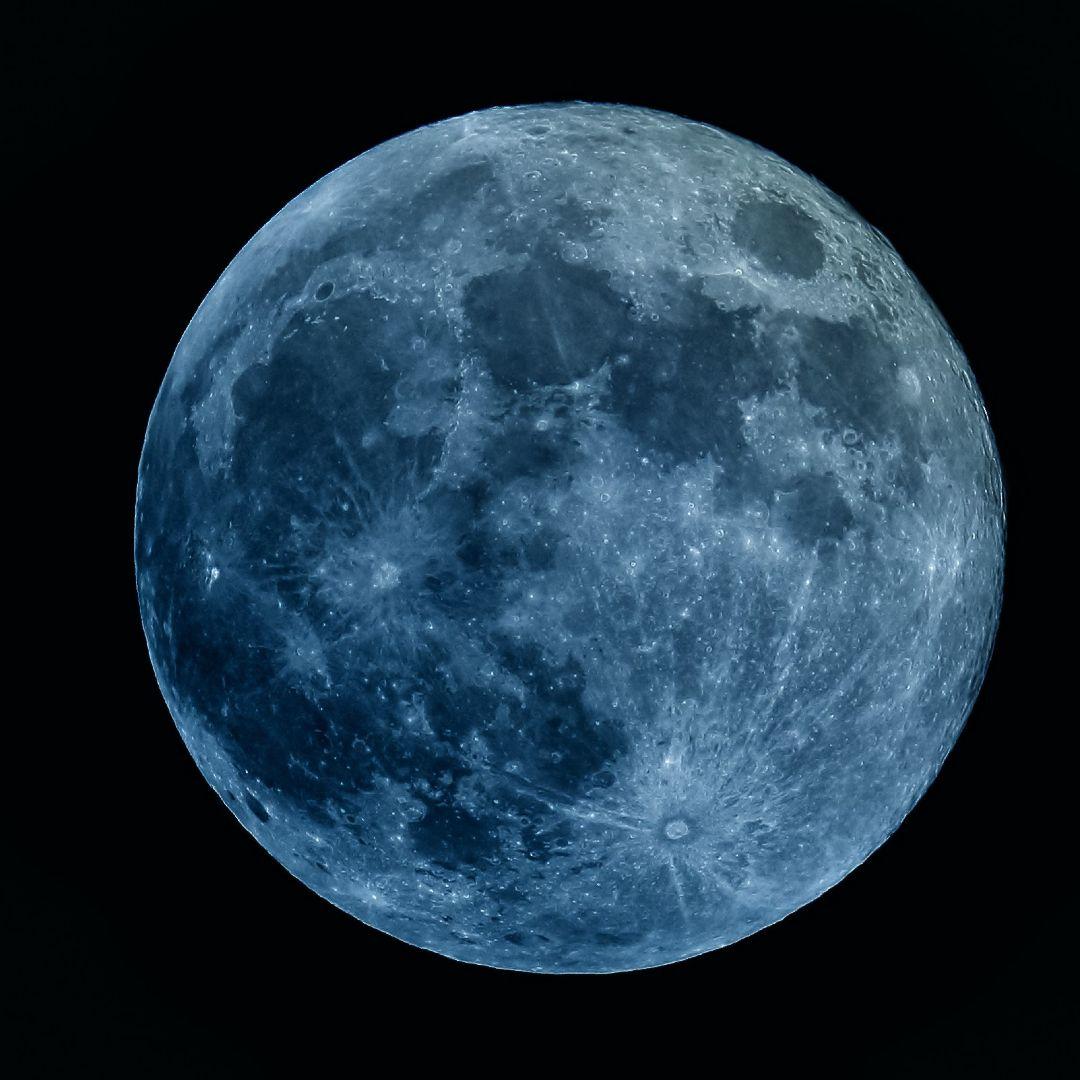 0 Comments 0 Shares 2K Views 0 Reviews
More Stories
