



-
5 Publicações
-
5 fotos
-
0 Vídeos
-
Seguido por 2 pessoas
Pesquisar

© 2026 MyConspiracyTheories.com
 Portuguese
Portuguese
 English
 Arabic
 French
 Spanish
 Deutsch
 Turkish
 Dutch
Dutch
 Italiano
 Russian
 Romaian
 Portuguese (Brazil)
 Greek
Greek
Atualizações Recentes
-
The Day They Found the Off Switch
They told us Digital ID would save time. No more cards, no passwords, no queues. Just your face, your thumb, your voice. One scan, and the world opens: salary, health records, travel, school, all under one “secure” identity.
Nobody asked what would happen if it ever stopped opening.
At first it was convenient. Your Digital ID paid for coffee, unlocked your front door, synced with your car, checked you into work. “Frictionless life,” they said. But the same ID that unlocked things also measured you. Every purchase, every post, every trip, every person you met built a quiet number in the background: your “Trust Index,” never shown, always there.
They called it optimization. It was a social credit score in everything but name.
When money went fully digital, it felt logical. Cash was “unsafe,” “unsanitary,” “used by criminals.” Your national wallet app arrived, linked to your Digital ID. Your balance became just numbers on a server and a green checkmark on your phone. Fast, easy, impossible to lose. Also impossible to touch. Programmable. Freezable. Reversible.
You didn’t notice the new phrases: “conditional access,” “behavioral spending limits,” “dynamic risk flags.” You just noticed that a friend who shared the wrong article had their transfer “delayed for review.” Another joked about the government and suddenly couldn’t buy a train ticket “due to security verification.”
Cars were next. Electric vehicles, mandated “for the planet,” connected 24/7 to the grid. Updates over the air, route suggestions, automatic tolls. The charger recognized your Digital ID; no card needed. Hidden in the user agreement: remote power management, remote speed control, remote immobilization “in case of misuse or emergency.”
You cheered when they used it on actual criminals. You shrugged when they used it on protesters. You got nervous only when an acquaintance—loud online, but harmless—sat in his driveway, pressing the start button over and over, staring at a dashboard message: “Mobility privileges temporarily suspended.”
That’s when the pattern snapped into focus. Identity, money, movement. Three chains, all run through the same invisible collar. They didn’t need to chip your brain. Mind control came from training you to fear the Off Switch. Post less. Complain less. Think twice before you click “share.” Not because you believed the official story, but because you were terrified of the unofficial one: that a faceless system could quietly decide you didn’t deserve full access to your own life today.
The new slavery didn’t look like fields and whips. It looked like a sliding scale of permissions. Full access if you played along. Partial access if you questioned too loudly. No access if you refused. Your social credit wasn’t a visible badge; it was an invisible thermostat on your existence, turned up or down by algorithms worshipped as “neutral.”
One update changed everything. Overnight, every Digital ID app popped the same message: “To continue, you must agree to behavior-based service conditions.” Most people tapped “Accept” automatically. Those who didn’t? Their screens froze. “Verification required.” Their cars refused to start. Their payments bounced. Their smart locks stayed shut.
They never needed to imprison the body when they could imprison the connection. A population that knows its money, movement, and identity can be dimmed like a light learns to keep its head down. You don’t have to brainwash people who are terrified of being switched off.The Day They Found the Off Switch They told us Digital ID would save time. No more cards, no passwords, no queues. Just your face, your thumb, your voice. One scan, and the world opens: salary, health records, travel, school, all under one “secure” identity. Nobody asked what would happen if it ever stopped opening. At first it was convenient. Your Digital ID paid for coffee, unlocked your front door, synced with your car, checked you into work. “Frictionless life,” they said. But the same ID that unlocked things also measured you. Every purchase, every post, every trip, every person you met built a quiet number in the background: your “Trust Index,” never shown, always there. They called it optimization. It was a social credit score in everything but name. When money went fully digital, it felt logical. Cash was “unsafe,” “unsanitary,” “used by criminals.” Your national wallet app arrived, linked to your Digital ID. Your balance became just numbers on a server and a green checkmark on your phone. Fast, easy, impossible to lose. Also impossible to touch. Programmable. Freezable. Reversible. You didn’t notice the new phrases: “conditional access,” “behavioral spending limits,” “dynamic risk flags.” You just noticed that a friend who shared the wrong article had their transfer “delayed for review.” Another joked about the government and suddenly couldn’t buy a train ticket “due to security verification.” Cars were next. Electric vehicles, mandated “for the planet,” connected 24/7 to the grid. Updates over the air, route suggestions, automatic tolls. The charger recognized your Digital ID; no card needed. Hidden in the user agreement: remote power management, remote speed control, remote immobilization “in case of misuse or emergency.” You cheered when they used it on actual criminals. You shrugged when they used it on protesters. You got nervous only when an acquaintance—loud online, but harmless—sat in his driveway, pressing the start button over and over, staring at a dashboard message: “Mobility privileges temporarily suspended.” That’s when the pattern snapped into focus. Identity, money, movement. Three chains, all run through the same invisible collar. They didn’t need to chip your brain. Mind control came from training you to fear the Off Switch. Post less. Complain less. Think twice before you click “share.” Not because you believed the official story, but because you were terrified of the unofficial one: that a faceless system could quietly decide you didn’t deserve full access to your own life today. The new slavery didn’t look like fields and whips. It looked like a sliding scale of permissions. Full access if you played along. Partial access if you questioned too loudly. No access if you refused. Your social credit wasn’t a visible badge; it was an invisible thermostat on your existence, turned up or down by algorithms worshipped as “neutral.” One update changed everything. Overnight, every Digital ID app popped the same message: “To continue, you must agree to behavior-based service conditions.” Most people tapped “Accept” automatically. Those who didn’t? Their screens froze. “Verification required.” Their cars refused to start. Their payments bounced. Their smart locks stayed shut. They never needed to imprison the body when they could imprison the connection. A population that knows its money, movement, and identity can be dimmed like a light learns to keep its head down. You don’t have to brainwash people who are terrified of being switched off. 0 Comentários 0 Compartilhamentos 2K Visualizações 0 Anterior
 -
The Hidden Truth of the Firmament: What They Don’t Want You to Know
For centuries, ancient texts spoke of a “firmament” — a vast dome separating the waters above from the waters below. Most dismissed it as poetry. But what if it wasn’t?
Some researchers believe the firmament is real — not a myth, but a physical boundary enclosing our world. They call it the Celestial Vault. According to this theory, the firmament is a massive crystalline structure, possibly made of unknown elements, refracting sunlight and creating the illusion of infinite space.
If this sounds far-fetched, consider the evidence often cited by firmament theorists:
The Antarctic Treaty of 1959, signed by over 50 nations, prohibits unrestricted civilian travel beyond certain latitudes. They claim this treaty exists to keep the public away from the “edges” — where the dome becomes visible.
Operation Fishbowl (yes, a real series of high-altitude nuclear tests) was, according to some, an attempt to test the strength of the dome.
Every “space photo,” they argue, is a composite — not because of artistic editing, but to hide the curvature of the vault itself.
The “waters above”? They point to the sky’s color, the sound barrier’s strange name, and meteorites containing water-like compounds as hints that something truly oceanic lies beyond our reach.
What if the stars aren’t distant suns, but light sources embedded within the dome — celestial mechanisms in a kind of grand simulation chamber?
Of course, mainstream science calls all of this pseudoscience or myth. But theories like this persist because they touch something ancient — the sense that we’re living inside a vast, carefully designed creation… and that someone, somewhere, doesn’t want us to look too closely at its ceiling.The Hidden Truth of the Firmament: What They Don’t Want You to Know For centuries, ancient texts spoke of a “firmament” — a vast dome separating the waters above from the waters below. Most dismissed it as poetry. But what if it wasn’t? Some researchers believe the firmament is real — not a myth, but a physical boundary enclosing our world. They call it the Celestial Vault. According to this theory, the firmament is a massive crystalline structure, possibly made of unknown elements, refracting sunlight and creating the illusion of infinite space. If this sounds far-fetched, consider the evidence often cited by firmament theorists: The Antarctic Treaty of 1959, signed by over 50 nations, prohibits unrestricted civilian travel beyond certain latitudes. They claim this treaty exists to keep the public away from the “edges” — where the dome becomes visible. Operation Fishbowl (yes, a real series of high-altitude nuclear tests) was, according to some, an attempt to test the strength of the dome. Every “space photo,” they argue, is a composite — not because of artistic editing, but to hide the curvature of the vault itself. The “waters above”? They point to the sky’s color, the sound barrier’s strange name, and meteorites containing water-like compounds as hints that something truly oceanic lies beyond our reach. What if the stars aren’t distant suns, but light sources embedded within the dome — celestial mechanisms in a kind of grand simulation chamber? Of course, mainstream science calls all of this pseudoscience or myth. But theories like this persist because they touch something ancient — the sense that we’re living inside a vast, carefully designed creation… and that someone, somewhere, doesn’t want us to look too closely at its ceiling.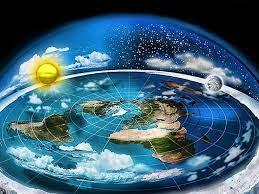 0 Comentários 0 Compartilhamentos 1K Visualizações 0 Anterior


Mais Stories
